Morocco rewards travelers who slow down. It is a country of medieval medinas, mountain passes, Roman ruins, and desert silence — but it is also a country of long distances and layered logistics. The difference between a trip that merely passes through Morocco and one that stays with you for years usually comes down to how it was planned. For most travelers, that means going private.
Why a Private Tour Beats a Group Tour in Morocco
Morocco’s highlights are spread across a wide arc, and the classic routes involve hours on the road. On a fixed group departure, the pace is set for the slowest common denominator: forty minutes at a site whether it deserves ten minutes or two hours, photo stops you did not choose, and shopping stops you did not ask for.
A private tour works differently. With a private driver-guide and a vehicle reserved for your party alone, the day bends around you. Want to leave Fes at dawn to beat the heat in the medina? Done. Want to linger over mint tea in a Chefchaouen side street that caught your eye? There is no bus waiting. This flexibility is the core of the better private Morocco tour packages — they are built around a route, but never locked to a minute-by-minute script.
Privacy also changes what you can see. Small riad courtyards, family-run workshops, and rural villages that cannot absorb a 40-person coach are open to a couple or a small family traveling privately. And when something unexpected happens — a festival in a village square, a sandstorm shifting your desert timing — a private guide adjusts in real time rather than consulting head office.
The Best Time to Visit Morocco
Morocco has three distinct climates in one country — Mediterranean coast, Atlas Mountains, and Sahara — so timing matters more here than in many destinations.
Spring (March to May) is the classic window. Temperatures in the imperial cities sit comfortably in the 70s and low 80s, the Middle Atlas is green, and the desert is warm without being punishing. This is peak season for luxury private tours Morocco operators run, and the best riads book out early.
Fall (September to November) is nearly as good. The summer heat breaks, harvest season brings color to the valleys, and October in particular offers warm days and cool, clear desert nights.
Summer (June to August) is hot — Marrakech and Fes regularly exceed 100°F — though the coast (Essaouira, Tangier) and the High Atlas stay pleasant. Winter (December to February) brings mild days in the cities but cold desert nights near freezing, snow on the high passes, and occasional road closures after storms. Winter is quiet and atmospheric, but pack for genuine cold after dark.
One more consideration: Ramadan shifts by roughly eleven days each year. Morocco remains welcoming during Ramadan, but restaurant hours, site schedules, and the rhythm of daily life change. A good planner will tell you honestly whether your dates overlap and what that means in practice.
A Logical 10-Day Route
Ten days is the sweet spot for a first private trip — long enough to cross the country without rushing, short enough to stay fresh. A luxury Morocco 10 day tour typically follows this arc:
Days 1–2: Casablanca and Rabat. Most international flights land in Casablanca. See the Hassan II Mosque — one of the largest in the world, and one of the few in Morocco open to non-Muslim visitors — then continue to Rabat, the calm, underrated capital, for the Kasbah of the Udayas and the Hassan Tower.
Day 3: Chefchaouen. A scenic drive north into the Rif Mountains brings you to the blue-washed town of Chefchaouen. It is a place for wandering: slow lanes, weavers’ shops, and mountain light that photographers cross oceans for.
Days 4–5: Fes. The spiritual and intellectual heart of Morocco. Fes el Bali is the world’s largest living medieval medina — some 9,000 alleys — and it demands a full day with a knowledgeable local guide. The tanneries, the madrasas, the dyers’ souks: this is Morocco at its most intense and rewarding. Keep the second morning free to revisit at your own pace.
Day 6: Middle Atlas to Merzouga. The long, beautiful drive south crosses cedar forests near Ifrane, passes through Midelt for lunch, and descends the Ziz Valley as the landscape turns to sand. By late afternoon you are at the edge of the Erg Chebbi dunes.
Day 7: The Sahara. The desert day is the emotional peak of most tailor made Morocco tours. A private Morocco desert tour done well means arriving at your camp by camel or 4×4 in the golden hour, dining under some of the darkest skies on earth, and — this matters — sleeping in a proper luxury camp with a real bed and an en-suite bathroom, not a basic bivouac. Sunrise over the dunes, when the sand turns rose and gold, justifies every mile of the drive.
Day 8: Todra and Dades. West through the Todra Gorges, where sheer rock walls rise hundreds of feet, then along the Dades Valley with its switchbacks and kasbahs. This is the “Road of a Thousand Kasbahs” country.
Day 9: Aït Benhaddou to Marrakech. The earthen ksar of Aït Benhaddou, a UNESCO site and film location for everything from Lawrence of Arabia to Gladiator, then over the High Atlas via the Tizi n’Tichka pass (7,400 feet) and down into Marrakech by evening.
Day 10: Marrakech. The medina, the Bahia Palace, the Saadian Tombs, and Jemaa el-Fnaa as it ignites at sunset. Depart the next day, or extend.
Extensions worth considering: two nights in Essaouira for Atlantic air and seafood, or a night in a High Atlas lodge near Imlil for mountain hiking. Adding either turns ten days into twelve without breaking the route’s logic.
Riads vs. Hotels: Where You Sleep Shapes the Trip
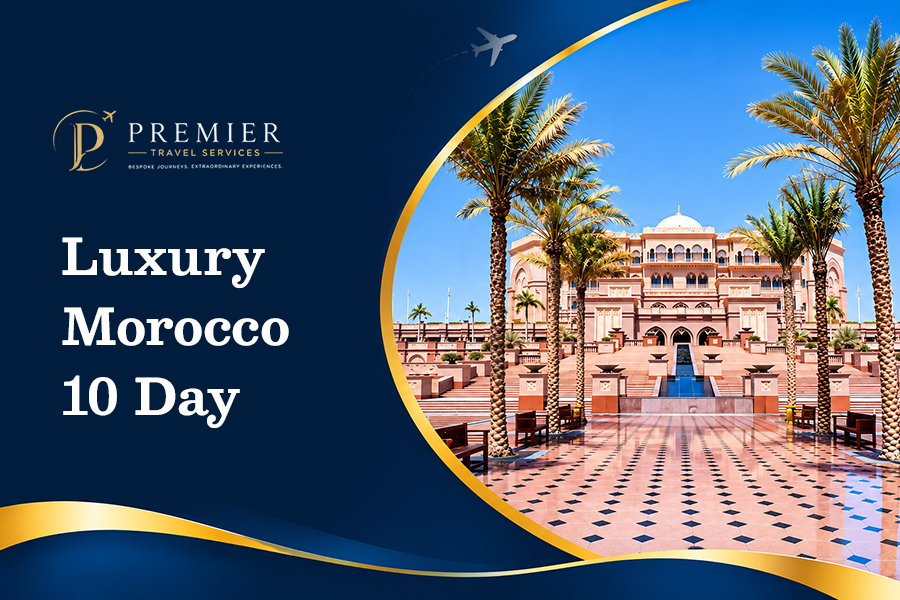
A riad is a traditional townhouse built around an interior courtyard, usually in the medina. The best riads offer an intimacy and sense of place no international hotel can match: breakfast on a rooftop terrace, staff who know your name by the second morning, architecture that is itself a cultural experience. The trade-offs are real — medina riads are reached on foot through alleys (your driver will coordinate luggage porters), and room sizes vary.
Hotels in the newer districts offer larger rooms, pools, and predictability. Many travelers do both: riads in Fes and Marrakech for atmosphere, a resort-style property for a rest night in between. Your planner should be candid about which specific properties suit you rather than defaulting to one style.
The Value of a Private Driver-Guide
In Morocco, your driver-guide is not a chauffeur. A good one is a fixer, translator, historian, and early-warning system in one person: rerouting around a closed mountain road, knowing which workshop is genuine and which is a commission trap, timing your arrival at a site to miss the tour groups. That is also why driver quality varies enormously — and why booking through an established planner who vets and re-books the same drivers matters more in Morocco than in most countries.
Desert Camp Realities
Not all “luxury camps” are equal. Ask specifically: private en-suite bathroom or shared? Real beds or mattresses on the ground? How many tents in the camp — six or sixty? Is the camp deep in the dunes or at their edge beside a road? The answers separate a magical night from a disappointing one, and reputable planners publish them plainly.
Food and Culture Highlights
Eat where the day takes you: tagines in a family home near the Dades Valley, grilled sardines in Essaouira, a cooking class in Fes, pastilla done properly in Rabat. Beyond food, build in encounters — a pottery cooperative in Safi, Berber (Amazigh) villages in the Atlas, the Gnawa musicians of Khamlia near Merzouga. These are the moments travelers describe years later, and a private format makes them possible.
Practical Planning Points
- Distances are long. Fes to Merzouga is a full day on the road; Marrakech to the desert is longer. Any itinerary that promises “Morocco in six days” is selling you windshield time. Pace is the single most important planning decision.
- Book early. The finest riads have eight to twelve rooms, and the best desert camps are small. For spring and fall travel, reserving key properties six to nine months ahead is realistic advice, not sales pressure.
- Dress and customs. Morocco is welcoming and relatively relaxed, but modest dress away from resorts — covering shoulders and knees, especially in medinas and rural areas — earns visibly warmer interactions.
- Money and tipping. The dirham is a closed currency; plan to exchange or withdraw on arrival. Tipping is customary for guides, drivers, and riad staff, and your planner can give you current norms.
- Cost drivers, honestly stated. On private tours, price follows the quality of the driver-guide, the standard of riads and desert camp, and how much ground you cover. Long private routes with top properties cost more than group departures because you are not sharing the vehicle, the guide, or the compromises.
Planning Your Morocco Trip
Premier Travel Services designs private Morocco journeys for travelers who want the country at its best — unhurried, well-guided, and built around you rather than a departure schedule. If you are considering a private tour of Morocco, call us at +1 888-359-1562 or visit gopremiertravel.com to start planning.